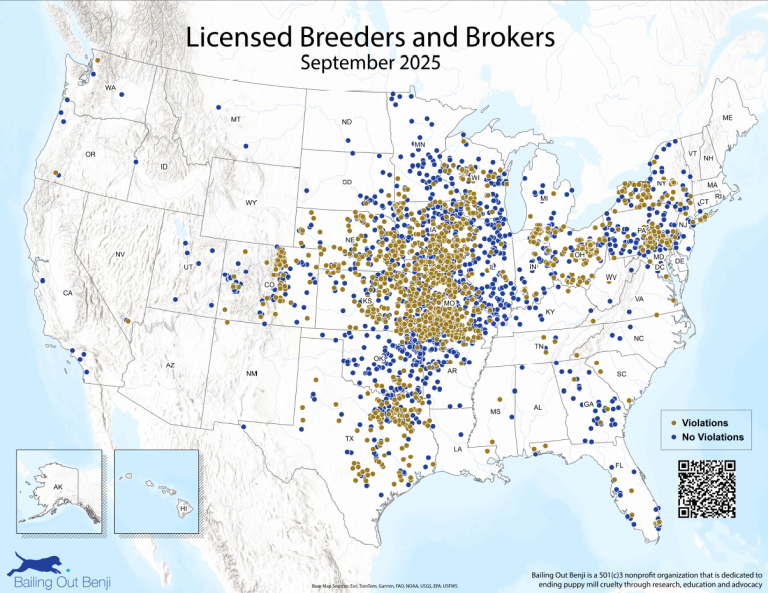
While most of the licensed, commercial dog breeders are located in the Midwest, a large majority of unlicensed breeders and even puppy mills are located in every state across the country. Breeders that sell their animals sight unseen are licensed and inspected by the USDA, but facilities on the local level are governed by a patchwork of state laws that vary widely in their licensing, inspections and enforcement.
Regulation of commercial breeders, pet stores, and rescues varies enormously by state. Some states require licensing, regular inspections, and detailed recordkeeping; others have minimal breeder-specific oversight, or none at all.
As a nonprofit focused on research-driven consumer education, we believe the public deserves to understand this legal landscape so that people can make informed decisions and know what protections do or don’t exist where they live. Below is a brief overview of the most common types of commercial breeder and pet store laws, and which states have adopted each one. This isn’t meant to be a comprehensive legal reference, it is a starting point for consumers who want to understand their state.
Please note: cities and counties may have stronger local laws than what’s outlined here. This page is an overview of state-level law and is not intended as legal advice.
Breeder Laws
Dog breeding regulations vary dramatically from state to state, and in some states, they barely exist at all, meaning a facility’s only oversight may be a federal USDA license, which only applies if it sells wholesale to pet stores or brokers. This patchwork means two facilities in identical condition can face completely different levels of scrutiny depending on which side of a state line they’re on, which is exactly why we track breeder data at both the federal and state level, rather than assuming a license (or the lack of one) tells the whole story.
States that require breeders to be licensed and regularly inspected
As you can imagine, there are ongoing efforts to improve animal welfare and consumer protections across the United States specifically surrounding the puppy mill and pet store issue. As new laws are passed, we will update the information above.
*Please know that many of these legal discussions happen on the local level, in cities or counties and would not be reflected above.
Consumer Protection Laws
Pet Financing Protection Laws
“Pet Financing Protection laws” are regulations designed to protect consumers who finance the purchase of a pet, often through a pet store or a breeder. These laws aim to prevent predatory lending practices and ensure that consumers are fully informed about the terms and conditions of their financing agreements. Some stores and financing companies offer predatory interest rates that go as high as 188%.
States With Pet Financing Laws:
California
Connecticut
Illinois
Indiana
Nevada
New Jersey
New York
Washington
Puppy Lemon Laws
“Puppy Lemon laws” prevent pet dealers from selling a consumer a pet that suffers from an illness, deadly disease, or congenital defects that could adversely affect the pet’s health, and from providing a clear notice to the consumer at the point of the sale. Each state has different criteria for consumer protections.
States With Puppy Lemon Laws:
Arizona
Arkansas
California
Connecticut
Delaware
Florida
Illinois
Maine
Maryland
Massachusetts
Minnesota
Nebraska
Nevada
New Hampshire
New Jersey
New York
Oregon
Pennsylvania
Rhode Island
South Carolina
Vermont
Virginia
Pet Store Laws
Retail Sales Ban or Pet Store Ordinance
A Retail Sales Ban (also called a Pet Store Ordinance) is a local or state law that prohibits pet stores from selling puppies, kittens, and sometimes rabbits from breeders or brokers. These laws don’t regulate breeders directly; they regulate where and how their animals can be resold.
States With Prohibitions Against Retail Sale of Puppies & Kittens in Pet Stores
California (2017)
Maryland (2018)
Maine* (2019)
Washington* (2021)
Illinois (2021)
New York** (2022)
Oregon* (2023)
Vermont (2024)
*Grandfathers in the current stores **Doesn’t go into effect until Dec. 2024
Pet Store Preemption Law
A Pet Store Preemption law is state-level legislation that blocks cities and counties from passing their own rules on how pets are sold, overriding local retail sales bans and pet store ordinances with a single, statewide standard instead. These laws are typically backed by the pet store industry because they prevent a patchwork of local restrictions.
States that determined that localities cannot pass ordinances pertaining to the retail sale of puppies and kittens
Arizona (2016)
Ohio (2016)
Iowa* (2017)
Texas* (2023)
Arkansas (2023)
Indiana (2024)
*Not a pet store specific law
Pet Store Licensing
Over half of the states require pet stores to be licensed or registered in some fashion. This ensures that pet stores meet certain standards of care and operation, helping to protect animal welfare and consumer interests. Not all of those states, however, perform regular inspections on those stores.
States that require pet stores to be licensed and regularly inspected:
Pet Store Sourcing laws regulate where pet stores are allowed to obtain the animals they sell, typically requiring that animals come from sources with a documented compliance record, rather than through breeders with violations, brokers, or unregulated supply chains. Depending on the state, these laws may direct stores toward shelters, rescues, or breeders that meet specific standards, rather than simply “licensed” status. Sourcing alone doesn’t guarantee humane treatment- that’s exactly why we track it. Bailing Out Benji is known for our pet store sourcing research. If you’d like to know more about the stores in your state, click here.
States that have sourcing laws that pet stores must follow
Arizona
Connecticut
Indiana
Washington
Pet Store Disclosure Laws
Some states have enacted “Pet Store Disclosure laws” requiring pet stores to provide customers with detailed information about the breeders from whom they source their animals. These laws often mandate that pet stores disclose the breeder’s name, address, and licensing information to ensure transparency and allow consumers to make informed decisions. By implementing these laws, states aim to promote accountability and discourage sourcing from unethical breeders.
States that require pet stores to disclose their breeders on their kennels and/or website
Arizona
Colorado
Connecticut
Washington
Subscribe to our Newsletter
Join the other 12,000+ supporters who’ve subscribed to receive news and alerts about puppy mill issues in their state.